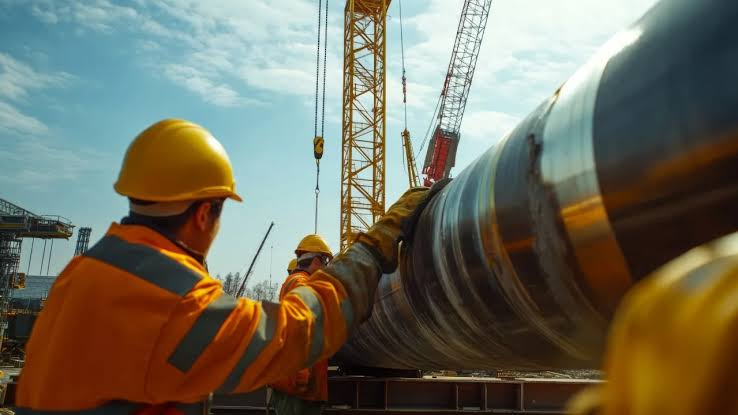
Engineering, Procurement and Construction (EPC) projects form the backbone of major industrial developments across the global energy, oil and gas, petrochemical, refining, power generation and infrastructure sectors. These projects involve complex engineering requirements, extensive material specifications, strict quality standards and demanding construction schedules.
Among the various procurement activities involved in an EPC project, piping procurement plays a particularly important role in determining project efficiency, cost control and timely execution.
Piping systems are essential for transporting liquids, gases, steam, chemicals and other process media throughout industrial facilities. From oil and gas processing plants and refineries to petrochemical facilities, desalination plants and power stations, every piping component must meet specific engineering, operational and safety requirements.
However, managing piping procurement for EPC projects is not simply about purchasing pipes, fittings, flanges and valves. It involves a coordinated process of engineering review, material requisition, supplier identification, technical evaluation, commercial negotiation, quality assurance, inspection, documentation and logistics management.
Delays in material sourcing, incorrect material specifications, supplier non-compliance, documentation discrepancies and inefficient logistics can create significant challenges for EPC contractors. These issues may affect construction milestones, increase project costs and disrupt overall project execution.
As industrial developments continue to expand across the UAE, Saudi Arabia, Qatar, Oman, Kuwait and other GCC markets, EPC contractors require more structured and reliable procurement strategies to manage complex piping material requirements.
This article explores how organisations can improve piping procurement for EPC projects through strategic sourcing, supplier evaluation, specification management, quality control, material traceability and effective supply chain coordination.
For EPC contractors and industrial procurement teams, implementing these practices can help create a more predictable, efficient and quality-focused procurement process.
Piping procurement is a critical part of the overall EPC project lifecycle. It connects engineering requirements with actual material availability, manufacturing capabilities, quality expectations and construction schedules.
A typical industrial piping package may include:
Seamless and welded carbon steel pipes.
Stainless steel and alloy steel pipes.
Duplex and super duplex piping materials.
API 5L line pipes.
Butt-weld fittings, including elbows, tees, reducers and caps.
Forged fittings and socket-weld fittings.
Industrial flanges, including weld neck, slip-on, blind and threaded flanges.
Industrial valves, including gate, globe, ball, check and butterfly valves.
Pipe supports and associated structural components.
Specialty piping materials for demanding operating environments.
Each product must be procured according to the project’s engineering specifications, applicable international standards, material grades, dimensions, pressure ratings and service conditions.
For example, a pipeline installation for an oil and gas facility may require API 5L line pipes, whereas process piping within a refinery may involve materials specified under ASTM and ASME standards.
Similarly, offshore projects, sour-service applications and high-pressure installations may require additional material, testing, inspection and certification requirements.
Why is effective piping procurement important?
An effective procurement strategy helps EPC contractors:
Maintain material availability according to construction schedules.
Reduce unnecessary procurement expenditure.
Minimise material specification errors.
Improve supplier accountability.
Ensure compliance with project quality requirements.
Maintain material traceability and documentation.
Coordinate deliveries across multiple project locations.
Reduce the risk of construction delays caused by material shortages.
Therefore, piping procurement should be treated as a strategic project function rather than an isolated purchasing activity.
EPC contractors frequently manage multiple suppliers, international manufacturers, engineering teams, inspection agencies and logistics providers. Coordinating these stakeholders while maintaining project timelines can be challenging.
Understanding common procurement problems is the first step towards developing a more efficient sourcing strategy.
One of the most common problems in industrial piping procurement is incomplete or inaccurate material specifications.
A purchase requirement that mentions only the pipe diameter and material grade may not provide sufficient information for accurate sourcing.
Important technical parameters include:
Material grade and specification.
Nominal pipe size (NPS).
Outside diameter.
Wall thickness and schedule.
Manufacturing method (seamless or welded).
Pressure and temperature requirements.
Pipe length and end preparation.
Applicable dimensional standards.
Coating and surface treatment requirements.
Testing and inspection requirements.
Even a small discrepancy between the engineering specification and supplied material can result in material rejection, rework or installation problems.
Recommended approach: EPC procurement teams should conduct a detailed technical review of material requisitions, bills of quantities and material take-offs before issuing purchase orders.
Finding a supplier that can meet technical requirements, commercial expectations and delivery deadlines is another major challenge.
Not every supplier has access to the required material grades, dimensions, quantities or manufacturing capabilities.
For example, sourcing standard carbon steel pipes may be relatively straightforward, while obtaining duplex, super duplex or specialised alloy steel materials can require a more extensive sourcing process.
Unreliable suppliers may also create problems through:
Delayed quotations.
Inaccurate stock information.
Inconsistent product quality.
Incomplete technical documentation.
Unexpected delivery changes.
Limited communication during order execution.
Recommended approach: Develop a supplier evaluation process that considers technical capability, manufacturing sources, quality systems, documentation practices, commercial terms and delivery performance.
Some piping materials require longer procurement cycles because of manufacturing complexity, limited availability or additional inspection requirements.
Specialty alloy pipes, large-diameter pipes, heavy-wall materials and project-specific valves may require sourcing directly from manufacturers or specialised distributors.
If procurement activities begin too late, these materials can become critical-path constraints.
Recommended approach: Identify long-lead items during the early engineering and procurement stages. Prioritise sourcing activities based on material criticality, availability, manufacturing lead time and required delivery dates.
Industrial piping materials must comply with applicable engineering and project specifications.
Missing mill test certificates, incorrect material markings, incomplete inspection records or mismatched heat numbers can create serious documentation and acceptance problems.
For projects requiring certified materials, procurement teams must ensure that the documentation corresponds to the actual products supplied.
Recommended approach: Establish documentation and inspection requirements before placing purchase orders, rather than attempting to collect missing records after dispatch.
Large EPC projects often require materials to be delivered in multiple batches across different construction phases.
Poor logistics coordination can lead to:
Delayed site deliveries.
Excessive material storage.
Incorrect shipment quantities.
Damaged materials during transportation.
Customs clearance delays.
Additional freight and handling expenses.
Recommended approach: Develop a material delivery schedule aligned with construction priorities, warehouse capacity, shipping requirements and project milestones.
A structured procurement strategy provides a clear framework for managing material requirements from engineering approval to final delivery.
Instead of treating each purchase as an independent transaction, EPC contractors should establish a coordinated procurement workflow.
Step 1: Review Engineering Documents and Material Requirements
The procurement process begins with a detailed review of engineering documents.
These documents generally include:
Material Requisition Lists (MRL).
Bills of Quantities (BOQ).
Material Take-Offs (MTO).
Piping and Instrumentation Diagrams (P&ID).
Isometric drawings.
Technical datasheets.
Project material specifications.
Applicable engineering standards.
The objective is to ensure that all required materials are clearly identified before sourcing begins.
Procurement teams should verify product descriptions, quantities, grades, dimensions, standards, testing requirements and delivery expectations.
Any unclear or conflicting technical information should be clarified with the engineering department before the RFQ is released.
Step 2: Prepare Accurate RFQs
A well-prepared Request for Quotation (RFQ) improves supplier response quality and reduces unnecessary clarification cycles.
An effective piping material RFQ should include:
Requirement | Information to include |
|---|---|
Product description | Pipe, valve, flange or fitting |
Material grade | ASTM, API or project-specific grade |
Size | NPS or specified dimensions |
Wall thickness | Schedule or actual thickness |
Standard | Applicable API, ASTM, ASME or EN |
Quantity | Required quantity and unit |
Inspection | ITP, TPI and testing requirements |
Documentation | MTC, certificates and traceability |
Delivery | Location and required delivery date |
Commercial terms | Incoterms and payment requirements |
Clear RFQs allow suppliers to evaluate requirements accurately and provide more comparable technical and commercial quotations.
Step 3: Identify Suitable Suppliers and Manufacturers
Supplier identification should be based on the technical complexity and commercial requirements of the project.
EPC contractors may source materials through:
Approved manufacturers.
Authorised distributors.
Industrial stockists.
Specialist piping suppliers.
International sourcing partners.
Regional supply networks.
For projects with approved manufacturer lists (AML) or approved vendor lists (AVL), procurement teams must verify that the proposed source meets the applicable project requirements.
Supplier selection should also consider production capacity, material availability, export experience and the ability to provide required inspection and certification records.
Step 4: Conduct Technical and Commercial Evaluation
A competitive quotation should not be evaluated on price alone.
Procurement teams must examine whether the proposed material fully satisfies the technical specification.
A technical bid evaluation (TBE) can include:
Material grade compliance.
Product dimensions.
Applicable manufacturing standards.
Pressure class and schedule.
Testing requirements.
Inspection requirements.
Manufacturer information.
Certification and documentation.
Delivery commitments.
Once technical compliance is established, the commercial bid evaluation (CBE) can compare pricing, payment terms, freight, delivery schedules, warranties and other contractual conditions.
This approach helps EPC contractors avoid selecting low-cost materials that do not meet project requirements.
Step 5: Finalise Purchase Orders and Delivery Schedules
The purchase order should clearly define the agreed technical, commercial and quality requirements.
It should include the approved material descriptions, quantities, specifications, inspection requirements, documentation deliverables, packing conditions and delivery milestones.
For large piping packages, procurement teams should also establish a delivery schedule covering partial shipments, priority materials and site-wise distribution.
Step 6: Monitor Order Execution
Procurement monitoring should continue after purchase order placement.
Regular follow-up helps identify manufacturing delays, stock shortages, inspection issues and potential logistics problems before they affect project schedules.
An effective purchase order tracking system should record:
Order confirmation.
Material availability.
Manufacturing status.
Inspection status.
Documentation status.
Dispatch readiness.
Shipment status.
Final delivery confirmation.
This creates better visibility across the entire piping procurement lifecycle.
Material selection is one of the most important considerations in EPC piping procurement.
Different industrial applications require different material properties depending on operating pressure, temperature, corrosion exposure, fluid composition and mechanical requirements.
4.1 Carbon Steel Pipes
Carbon steel pipes are widely used in industrial facilities, oil and gas pipelines, refineries, power plants and general process piping applications.
They offer a practical combination of mechanical strength, availability and cost efficiency.
Common specifications include:
ASTM A106 for seamless carbon steel pipes in applicable high-temperature service.
ASTM A53 for specified welded and seamless steel pipe applications.
API 5L for line pipe applications.
Material selection must consider the required grade, manufacturing process, service conditions and project specification.
4.2 Stainless Steel Pipes
Stainless steel piping is commonly used where corrosion resistance, hygiene or chemical compatibility is important.
Common applications include:
Chemical processing facilities.
Petrochemical plants.
Food and pharmaceutical industries.
Water treatment facilities.
Industrial process systems.
Common material specifications include ASTM A312, with grades such as TP304, TP304L, TP316 and TP316L, depending on the application.
4.3 Alloy Steel Pipes
Alloy steel pipes are used in demanding applications requiring specific mechanical properties, elevated-temperature performance or resistance to particular operating conditions.
They are commonly found in:
Thermal power plants.
Refinery process units.
High-temperature steam systems.
Industrial boilers.
Petrochemical facilities.
ASTM A335 is an important specification covering seamless ferritic alloy-steel pipe for high-temperature service.
4.4 Duplex and Super Duplex Stainless Steel
Duplex and super duplex materials offer a combination of properties that makes them suitable for certain demanding corrosion environments.
They are used in selected applications across:
Offshore oil and gas facilities.
Seawater handling systems.
Desalination plants.
Chemical processing.
Marine environments.
Their procurement requires careful consideration of grade, manufacturing requirements, corrosion-service conditions, testing and applicable project specifications.
4.5 API 5L Line Pipes
API 5L line pipes are widely used in pipeline transportation systems for oil, gas and other applicable fluid transportation services.
Procurement teams should verify:
Required API 5L grade.
Product Specification Level (PSL).
Pipe size and wall thickness.
Seamless or welded manufacturing method.
End preparation.
Coating requirements.
Testing and inspection.
Mill test certification.
Correct specification matching is essential to ensure that the supplied line pipes meet the intended pipeline design and project requirements.
Supplier selection directly affects material quality, procurement costs, project timelines and supply chain reliability.
EPC contractors should establish a consistent supplier qualification and evaluation process.
Key Supplier Evaluation Criteria
Evaluation parameter | What to verify |
|---|---|
Technical capability | Ability to meet project specifications |
Product range | Availability of required piping materials |
Quality systems | Relevant quality management procedures |
Source verification | Manufacturer and supply chain details |
Documentation | MTC and inspection records |
Delivery performance | Ability to meet agreed schedules |
Commercial competitiveness | Pricing and payment conditions |
Communication | Responsiveness and order follow-up |
Export capability | Shipping and international documentation experience |
Why Strategic Sourcing Matters
Strategic sourcing involves identifying appropriate suppliers and building a supply network that supports both immediate procurement requirements and long-term project needs.
Instead of depending on a single source for every product, EPC contractors can establish a qualified supplier network across different product categories.
For example:
Carbon steel pipe sourcing from established pipe manufacturers and stockists.
Stainless steel fittings from specialist industrial suppliers.
Industrial valves from qualified valve manufacturers.
Flanges and forged fittings from suitable manufacturers and distributors.
Specialty alloy materials from suppliers with relevant technical capabilities.
A diversified sourcing strategy can improve supply flexibility, especially when dealing with large quantities and specialised materials.
Quality assurance is fundamental to industrial piping procurement.
Materials used in oil and gas facilities, refineries, petrochemical plants and power generation projects must meet the relevant technical and quality requirements.
Procurement teams should establish quality requirements during the RFQ and purchase order stages.
6.1 Material Test Certificates (MTC)
A Material Test Certificate provides information about the material’s chemical composition, mechanical properties and applicable inspection or testing results.
For industrial piping materials, EN 10204 Type 3.1 certification is commonly specified where required by the project.
Some projects may require additional inspection or certification arrangements, including Type 3.2, depending on contractual and technical requirements.
6.2 Heat Number Traceability
Heat-number traceability links the physical material to its relevant manufacturing and quality records.
This is particularly important for project-critical piping materials where material identification and certification must remain connected throughout the supply chain.
Procurement and quality teams should verify:
Heat numbers on material markings.
Corresponding MTC records.
Product identification and dimensions.
Material grade and specification.
Required inspection documentation.
6.3 Third-Party Inspection (TPI)
Certain EPC projects require independent inspection through an approved third-party inspection agency.
Depending on the project inspection and test plan, inspection activities may include:
Visual inspection.
Dimensional inspection.
Material identification.
Positive Material Identification (PMI).
Hydrostatic testing.
Mechanical testing.
Non-Destructive Testing (NDT).
Final inspection before dispatch.
Not every inspection applies to every product. The required inspection scope should be established by the project specification and approved Inspection and Test Plan (ITP).
6.4 Compliance with International Standards
Industrial piping materials may be governed by different international standards depending on the product and application.
Standard | Typical application |
|---|---|
API 5L | Line pipes |
ASTM A106 | Seamless carbon steel pipes |
ASTM A312 | Stainless steel pipes |
ASTM A335 | Alloy steel pipes for high-temperature service |
ASME B16.5 | Pipe flanges and flanged fittings |
ASME B16.9 | Factory-made wrought butt-welding fittings |
ASME B16.11 | Forged fittings |
ASME B16.34 | Valves |
EN 10204 | Inspection documents |
NACE MR0175 / ISO 15156 | Materials for applicable H₂S-containing environments |
The applicable standard, edition and supplementary requirements must always be confirmed against the project’s engineering documents.
Key takeaway: Effective quality assurance is not limited to checking certificates at the time of delivery. It begins with procurement planning and continues through supplier selection, inspection, documentation and final material acceptance.
Digital procurement management can improve visibility, coordination and decision-making across large EPC projects.
Traditional procurement processes that rely heavily on spreadsheets, emails and manual follow-ups can become difficult to manage when hundreds or thousands of material line items are involved.
Digital systems can help procurement teams manage information more efficiently.
1. Centralised Material Management
Maintain a single database containing material descriptions, specifications, quantities, suppliers, purchase orders and delivery status.
2. Real-Time Purchase Order Tracking
Monitor the progress of orders from supplier confirmation through dispatch and final delivery.
3. Digital Documentation Management
Store and organise MTCs, inspection reports, purchase orders, shipping documents and other project records.
4. Inventory and Stock Visibility
Monitor available stock, reserved quantities, incoming materials and project-specific allocations.
5. Procurement Reporting and Analytics
Use procurement dashboards to monitor:
Purchase order status.
Supplier delivery performance.
Procurement cycle time.
Material availability.
Cost variations.
Outstanding documentation.
Delayed or critical materials.
Procurement analytics can help project teams identify recurring supply chain issues and improve future purchasing strategies.
For example, comparing planned and actual delivery dates can highlight suppliers with recurring delays.
Similarly, reviewing material consumption and procurement forecasts can help reduce unnecessary inventory accumulation.
A data-driven procurement strategy improves coordination between engineering, procurement, quality assurance, logistics and construction teams.
Cost optimisation is a major objective in EPC project procurement. However, the lowest initial purchase price does not necessarily represent the lowest overall procurement cost.
A comprehensive cost evaluation should consider the total landed cost of the materials.
Bulk Purchasing and Package Procurement
Combining suitable material requirements into larger procurement packages can improve quotation comparability and create opportunities for more competitive commercial terms.
Early Procurement Planning
Identifying critical and long-lead materials early helps avoid emergency purchases, expedited freight and schedule-related additional costs.
Supplier Consolidation
Working with qualified suppliers capable of providing multiple material categories can reduce coordination efforts and simplify procurement administration.
Technical Standardisation
Where engineering permits, standardising compatible material specifications, sizes and components can reduce unnecessary variations and simplify sourcing.
Optimised Inventory Planning
Balancing stock availability against actual construction requirements helps reduce excess inventory and storage expenses.
Freight and Logistics Optimisation
Consolidating shipments, planning phased deliveries and selecting appropriate transportation methods can improve logistics efficiency.
The total cost of procurement should include more than the quoted unit price.
It may include:
Material purchase price.
Freight and transportation.
Customs and import-related charges.
Inspection costs.
Packaging and handling.
Warehousing.
Documentation.
Potential rework or replacement costs.
Costs associated with delayed deliveries.
A supplier offering a slightly higher initial quotation may provide better overall value through reliable delivery, correct documentation and consistent quality.
Long-lead materials can significantly affect EPC project execution.
Certain products may require extended manufacturing, special testing, international transportation or additional approval procedures.
Typical long-lead piping procurement items may include:
Large-diameter line pipes.
Heavy-wall alloy steel pipes.
Duplex and super duplex materials.
Specialised industrial valves.
High-pressure flanges.
Custom-engineered piping components.
Project-specific coated pipes.
Identify critical materials during early engineering.
Use preliminary material take-offs and engineering forecasts to identify items that could affect the construction critical path.
Establish procurement priorities.
Classify materials according to technical criticality, delivery requirements, manufacturing lead time and project impact.
Coordinate engineering and procurement teams.
Ensure that material requisitions, technical clarifications and engineering approvals are completed in time.
Maintain supplier progress reports.
Track manufacturing milestones, inspection dates, documentation status and expected dispatch dates.
Develop contingency sourcing options.
Where permitted by project requirements, identify alternative qualified sources to reduce the risk of supply disruption.
Effective long-lead management allows procurement teams to anticipate potential delays instead of responding only after schedules are affected.
For EPC contractors operating across the Middle East, logistics management is an essential part of piping material procurement.
The UAE serves as an important regional industrial supply and distribution base, supporting procurement activities for projects in Saudi Arabia, Qatar, Oman, Kuwait, Bahrain and other regional markets.
However, cross-border material delivery requires careful planning and coordination.
Material availability and dispatch readiness.
Export packing and preservation.
Freight and transportation arrangements.
Customs documentation.
Country-specific import requirements.
Shipping schedules.
Delivery location and site access.
Material handling and storage.
Delivery documentation and acknowledgement.
EPC contractors working across different GCC markets may benefit from suppliers that understand regional sourcing and delivery requirements.
For example:
UAE: Industrial material sourcing and supply for oil and gas, refining and infrastructure projects.
Saudi Arabia: Piping material procurement for energy, petrochemical and industrial developments.
Qatar: Industrial piping and equipment supply for energy and infrastructure requirements.
Oman: Procurement support for oil and gas, industrial and infrastructure projects.
Kuwait: Piping and flow-control material sourcing for industrial facilities.
Bahrain: Supply coordination for industrial and energy-related applications.
A well-coordinated regional supply network can help EPC procurement teams manage multiple project locations through a more organised procurement and delivery process.
Managing separate suppliers for pipes, valves, fittings, flanges and related industrial products can increase administrative workload and complicate delivery coordination.
An integrated industrial piping supplier can provide a more coordinated approach by managing multiple product categories under a single procurement channel.
Key Benefits of Integrated Piping Procurement
1. Consolidated Material Sourcing
EPC contractors can coordinate different piping material categories through one supply partner, subject to product availability and technical requirements.
2. Simplified Communication
A central commercial contact can make quotation follow-ups, order coordination and delivery communication easier.
3. Improved Documentation Coordination
Material certificates, inspection records and traceability documents can be organised according to the agreed purchase order and project requirements.
4. Better Delivery Planning
Multiple material categories can be coordinated around project schedules and phased delivery requirements.
5. Greater Procurement Visibility
A consolidated procurement process makes it easier to monitor outstanding requirements, order status and delivery progress.
6. Reduced Administrative Complexity
Coordinating fewer commercial interfaces can help reduce the time spent managing multiple independent supplier relationships.
For large EPC projects, these benefits can contribute to a more streamlined material procurement and supply chain process.
To achieve consistent procurement performance, EPC contractors should adopt a structured set of best practices.
Best practice | Expected benefit |
|---|---|
Prepare accurate MTOs and BOQs | Reduces material discrepancies |
Define complete technical specifications | Improves sourcing accuracy |
Identify long-lead materials early | Reduces schedule risks |
Qualify suitable suppliers | Improves supply reliability |
Conduct technical bid evaluations | Prevents specification mismatches |
Define inspection requirements upfront | Improves quality coordination |
Verify MTC and heat traceability | Strengthens material documentation |
Monitor purchase orders | Improves delivery visibility |
Coordinate logistics and shipping | Reduces delivery disruptions |
Maintain supplier performance records | Supports continuous improvement |
EPC procurement departments can also track key performance indicators (KPIs) to measure operational effectiveness.
Some useful KPIs include:
On-time delivery percentage.
Purchase order cycle time.
Supplier quotation response time.
Material rejection rate.
Procurement cost variance.
Supplier non-conformance rate.
Documentation completeness.
Expedited shipment frequency.
Outstanding purchase order value.
Long-lead material status.
Tracking these indicators helps identify weaknesses in the procurement process and supports continuous operational improvement.
Gasify Middle East Trading LLC provides industrial procurement and material supply support for EPC contractors, oil and gas operators, refineries, petrochemical facilities, power generation companies and infrastructure projects.
Based in the UAE, Gasify supports project procurement requirements through a combination of regional stock sourcing and international supplier coordination.
Our approach focuses on understanding the technical and commercial requirements of each project before coordinating material sourcing, quality documentation and delivery.
Gasify supports sourcing and supply requirements across a range of industrial piping products, including:
Industrial Pipes
Seamless and welded pipes.
Carbon steel pipes.
Stainless steel pipes.
Alloy steel pipes.
Duplex and super duplex pipes.
API 5L line pipes.
Industrial Valves
Ball valves.
Gate valves.
Globe valves.
Check valves.
Butterfly valves.
Plug valves.
Control valves.
Pipe Fittings
Butt-weld elbows.
Equal and reducing tees.
Concentric and eccentric reducers.
Pipe caps.
Forged fittings.
Socket-weld fittings.
Industrial Flanges
Weld neck flanges.
Slip-on flanges.
Blind flanges.
Socket-weld flanges.
Threaded flanges.
Lap joint flanges.
Additional industrial material categories include steel plates, structural steel, instrumentation products and electrical accessories.
Gasify’s procurement support covers the key stages of industrial material sourcing.
Requirement Review: Understanding BOQs, MTOs, MRLs, drawings and technical specifications.
Technical Evaluation: Reviewing grades, dimensions, standards and project requirements.
Global Sourcing: Identifying suitable manufacturers, distributors and stockists.
Supplier Evaluation: Coordinating technical and commercial alignment.
Quality and Inspection: Supporting inspection requirements and quality documentation.
Documentation: Coordinating MTCs, heat-number traceability and relevant inspection records.
Logistics: Managing shipment and delivery coordination.
Project Delivery: Supporting phased or consolidated material supply according to the agreed requirements.
Gasify provides procurement support from its UAE base for industrial and EPC requirements across the GCC and international markets.
Our regional supply approach supports project requirements associated with:
UAE oil and gas projects.
Saudi Arabia industrial and energy developments.
Qatar oil and gas infrastructure.
Oman industrial and energy projects.
Kuwait petrochemical and industrial facilities.
Bahrain industrial supply requirements.
Project-specific compliance, material availability, approved-source requirements and documentation are evaluated against the individual enquiry and applicable project specifications.
UAE-based industrial supplier and stockist.
Comprehensive pipes, valves, fittings and flanges portfolio.
Regional stock and international sourcing support.
Technical specification review.
Quality documentation and traceability coordination.
Inspection and logistics support.
Complete and partial piping package sourcing.
GCC and international delivery coordination.
Whether your requirement involves individual piping components or a complete EPC piping material package, Gasify aims to provide a coordinated procurement and supply solution aligned with your project specifications.
Explore our industrial procurement and supply solutions to learn more about our sourcing, quality and delivery support.
The industrial procurement landscape is evolving as EPC contractors face increasing pressure to improve efficiency, control project expenditure and strengthen supply chain reliability.
Several developments are shaping the future of piping procurement.
Digital procurement platforms are improving the way material requirements, supplier quotations, purchase orders and delivery schedules are managed.
Automation can reduce manual administrative tasks and improve procurement visibility.
Geopolitical developments, manufacturing capacity constraints and transportation disruptions have encouraged companies to develop more diversified sourcing strategies.
EPC contractors increasingly need access to qualified suppliers across different geographic markets.
Project owners and operators continue to emphasise material verification, inspection documentation and traceability, particularly for critical industrial applications.
Integrated supply arrangements can simplify sourcing and coordination for large material packages.
Combining suitable product categories under a coordinated procurement structure can reduce administrative complexity and improve delivery planning.
Industrial organisations are paying greater attention to responsible procurement practices, efficient transportation, material utilisation and supplier management.
In the coming years, procurement teams that combine technical expertise, digital systems, qualified sourcing networks and effective logistics coordination will be better positioned to manage increasingly complex EPC projects.
Successful piping procurement requires more than competitive pricing and product availability. It demands a structured approach that connects engineering requirements, supplier capabilities, quality assurance, documentation and logistics.
For EPC contractors operating in the oil and gas, petrochemical, refining, power and infrastructure sectors, an efficient procurement strategy can make a significant difference to project execution.
Accurate material requisitions, early identification of long-lead items, qualified supplier selection, technical bid evaluation, inspection planning and effective material traceability all contribute to a more reliable procurement process.
Equally important is choosing supply partners that understand the technical requirements and commercial complexities of industrial projects.
As EPC developments continue across the UAE and GCC, coordinated sourcing and project-focused material supply will remain essential to maintaining quality, managing costs and meeting construction schedules.
Gasify Middle East supports EPC contractors and industrial procurement teams with piping material sourcing, technical coordination, quality documentation and delivery support.
If your organisation is planning an industrial project, refinery expansion, pipeline installation or infrastructure development, connect with Gasify Middle East to discuss your piping procurement requirements.
Request a Piping Material Quotation from Gasify Middle East
Need a Reliable Piping Material Supply Partner for Your EPC Project?
Send your BOQ, MTO, MRL, RFQ or technical specifications to Gasify Middle East for project-specific sourcing and quotation support.
Our supply categories:
Pipes, valves, fittings and flanges.
Carbon steel, stainless steel and alloy materials.
Duplex and super duplex materials.
Complete and partial piping material packages.
Explore Procurement Solutions Visit Gasify Middle East
Website: gasifymiddleeast.com
————————————————————————————————–
These FAQs are designed to address relevant long-tail search queries and improve the article’s usefulness for EPC procurement professionals.
1. What is piping procurement in EPC projects?
Piping procurement in EPC projects is the process of sourcing, evaluating, purchasing, inspecting and delivering piping materials required for industrial construction. It includes pipes, fittings, flanges, valves and associated components according to engineering specifications, quality standards and project schedules.
2. Why is piping procurement important for EPC contractors?
Piping procurement directly affects project costs, construction schedules, material quality and operational safety. Efficient procurement ensures that the correct materials are available at the required location and time while meeting applicable engineering and quality requirements.
3. What materials are commonly required for EPC piping projects?
Commonly required materials include carbon steel pipes, stainless steel pipes, alloy steel pipes, duplex and super duplex pipes, API 5L line pipes, industrial valves, butt-weld fittings, forged fittings and ASME flanges.
4. What international standards are used in piping material procurement?
Common standards include API 5L, ASTM A106, ASTM A312, ASTM A335, ASME B16.5, ASME B16.9, ASME B16.11 and ASME B16.34. The applicable standards depend on the product type, engineering design and project specification.
5. How can EPC contractors reduce piping procurement costs?
EPC contractors can reduce procurement costs through early sourcing, bulk purchasing, supplier consolidation, accurate material take-offs, competitive supplier evaluations, inventory optimisation and efficient logistics planning without compromising technical and quality requirements.
6. What documents are required for piping material procurement?
Typical documents include material requisitions, BOQs, MTOs, technical datasheets, RFQs, purchase orders, mill test certificates, inspection reports, packing lists and shipping documents. The exact documentation depends on the project specification and purchase order.
7. What is material traceability in piping procurement?
Material traceability is the process of linking supplied piping materials to their manufacturing and quality records. It commonly involves heat-number identification, material markings, mill test certificates and inspection documentation.
8. How does supplier selection affect EPC project procurement?
Supplier selection affects material quality, technical compliance, procurement costs and delivery performance. Qualified suppliers with suitable product capabilities, reliable documentation and effective logistics support help minimise procurement risks.
9. What are the common challenges in oil and gas piping procurement?
Common challenges include long manufacturing lead times, limited material availability, incorrect specifications, supplier delays, certification discrepancies, inspection issues and international logistics complications.
10. Does Gasify Middle East support EPC piping material procurement in the UAE and GCC?
Yes. Gasify Middle East provides industrial piping material sourcing and procurement support from the UAE for EPC contractors and industrial buyers. Its product range includes pipes, valves, fittings and flanges, with sourcing, technical review, quality documentation and delivery coordination according to project requirements.
————————————————————————————————–
References:
The technical information presented in this article is informed by recognised international standards, industry guidelines and technical resources relevant to industrial piping procurement, EPC project management and material quality assurance. For further technical information, readers may refer to the following authoritative resources:
American Petroleum Institute (API): API 5L – Specification for Line Pipe, covering requirements for steel pipes used in pipeline transportation systems. Visit API.
ASTM International: International standards covering carbon steel pipes, stainless steel pipes, alloy steel materials and industrial piping products. Visit ASTM International.
ASME: Standards and technical specifications for piping components, including flanges, fittings and industrial valves. Visit ASME.
ISO 15156: Materials for use in H₂S-containing environments in oil and gas production, including material selection and qualification requirements. View ISO 15156.
EN 10204: Inspection documents and certification requirements for metallic products, including material test certificates. Visit CEN-CENELEC.
Canadian Energy Regulator: Technical guidance on pipeline fittings quality assurance and inspection practices. Read the Technical Paper.
Disclaimer: These references are provided for general technical and educational purposes. Applicable standards, editions, inspection requirements and material specifications should always be verified against the relevant project documentation and contractual requirements.