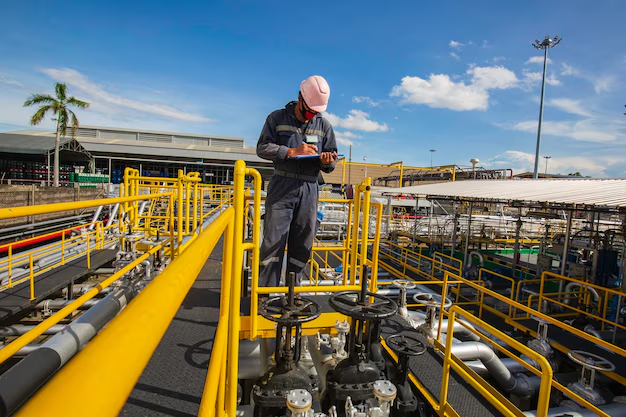
In industrial sectors such as oil and gas, petrochemicals, power generation, refining, and infrastructure development, material quality is directly connected to operational safety, equipment performance, and project reliability. Every pipe, valve, flange, fitting, steel plate, and structural component used in an industrial project must meet specific technical requirements and applicable international standards.
However, verifying the physical quality of industrial materials is only one part of the process. Project owners, engineering contractors, and procurement teams must also establish where materials originate, which manufacturing processes they have undergone, whether they meet the specified material grades, and whether their inspection and certification records can be verified.
This is where material traceability in industrial supply becomes essential.
Material traceability provides a documented connection between a material’s original manufacturer, production batch, inspection records, certification documents, storage, distribution, and final delivery. It enables procurement professionals and quality assurance teams to verify that the materials received are consistent with the approved technical specifications and project requirements.
For oil and gas projects, where materials may operate under high pressure, elevated temperatures, corrosive environments, and demanding service conditions, effective material traceability is an important part of quality assurance and risk management.
At Gasify Middle East, material sourcing and procurement involve attention to technical specifications, applicable international standards, quality documentation, inspection requirements, and project delivery coordination. Understanding material traceability helps industrial buyers make more informed procurement decisions and maintain better control over their supply chains.
Material traceability is the systematic process of identifying, recording, tracking, and verifying industrial materials throughout their supply chain lifecycle.
It establishes a connection between the physical material and its supporting technical documentation, including manufacturing records, material certificates, inspection reports, and delivery documentation.
In practical terms, material traceability allows a procurement or quality control team to answer several important questions:
Who manufactured the material?
Where was the material manufactured?
Which material grade and specification does it meet?
What is its heat number or production batch identification?
Does the material have an applicable Mill Test Certificate (MTC)?
Were the required inspections and tests completed?
Does the delivered material match the approved purchase order?
Can the material be traced back to its original manufacturing records?
For example, consider a carbon steel pipe supplied for an oil and gas pipeline project. The pipe may be specified under API 5L or another applicable project specification.
The physical pipe should carry identification markings that connect it to its manufacturing batch. Its heat number should correspond with the relevant Mill Test Certificate, which contains details such as chemical composition, mechanical properties, manufacturing information, and inspection results.
If the project requires additional inspection, those records must also be available and linked to the relevant material.
This creates a traceable documentation chain from the original manufacturing process to the final project delivery.
The oil and gas industry operates under strict technical, safety, and quality requirements. Materials used in pipelines, refineries, processing facilities, offshore platforms, and petrochemical installations must be suitable for their intended operating conditions.
A material that appears physically acceptable may still be unsuitable if its grade, chemical composition, manufacturing history, or certification cannot be verified.
Material traceability helps address these risks.
Every industrial project has defined material requirements. These may include material grade, wall thickness, pressure rating, dimensional tolerances, manufacturing method, and applicable standards.
For example:
API 5L for line pipe.
ASTM A106 for seamless carbon steel pipe.
ASTM A312 for stainless steel pipe.
ASTM A234 for wrought carbon and alloy steel pipe fittings.
ASTM A105 for carbon steel forged components.
ASTM A350 for carbon and low-alloy steel forgings.
ASME B16.5 for pipe flanges and flanged fittings.
These specifications establish requirements for different material types and product applications.
Material traceability helps procurement and inspection teams establish whether the supplied materials correspond to the specifications stated in the purchase order and project documentation.
It also helps identify discrepancies before materials are released for fabrication or installation.
Industrial projects frequently involve different material grades and specifications within the same procurement package.
For example, a project may require carbon steel, stainless steel, duplex stainless steel, and alloy steel components.
Although some materials may have similar physical appearances, their chemical compositions and mechanical properties can differ significantly.
Without proper identification and traceability, the risk of incorrect material substitution or mixing increases.
Heat numbers, grade markings, batch identification, and corresponding material certificates help prevent these problems.
For quality-critical applications, additional verification methods such as Positive Material Identification (PMI) may be required by the project specification or inspection plan.
Pipelines, pressure vessels, refinery equipment, and petrochemical processing systems operate under demanding conditions.
Incorrect material selection can contribute to corrosion, premature equipment failure, cracking, leakage, and other operational problems.
Material traceability helps engineering and quality teams verify that materials are supported by the required manufacturing and inspection documentation.
This is particularly important when selecting stainless steel, duplex, super duplex, and alloy steel materials for applications involving corrosion resistance, temperature variations, or demanding process conditions.
EPC contractors and project owners typically require technical documentation at different stages of procurement and construction.
Material traceability supports the preparation and maintenance of:
Material Test Certificates (MTCs).
Material Test Reports (MTRs).
Inspection and Test Plans (ITPs).
Third-Party Inspection (TPI) reports.
Positive Material Identification (PMI) reports, where required.
Packing lists and delivery records.
Material receiving inspection reports.
Non-Conformance Reports (NCRs), where applicable.
A well-organised documentation system makes it easier to review materials, resolve discrepancies, and prepare project quality dossiers.
Missing certificates, incorrect material identification, and documentation discrepancies can delay material acceptance and project execution.
For example, if a shipment of industrial piping materials arrives without the required certification or with mismatched heat numbers, the receiving team may need to place the materials on hold until the discrepancy is investigated.
This can affect fabrication schedules, installation activities, and project milestones.
Effective material traceability helps reduce these risks by making documentation verification part of the procurement and inspection process.
A Mill Test Certificate (MTC), also known as a Material Test Certificate or Material Test Report (MTR), is an important quality document in industrial material procurement.
It is issued by the manufacturer and provides information about the material’s manufacturing details and test results.
Depending on the applicable product standard, certificate type, and project requirements, an MTC may contain:
Manufacturer’s name and identification.
Material description and product form.
Applicable material standard and grade.
Heat number or cast number.
Chemical composition.
Mechanical test results.
Heat treatment condition.
Manufacturing and testing information.
Inspection results.
Certificate identification and authorised validation.
For industrial buyers, an MTC helps establish whether the material’s documented properties correspond to the ordered requirements.
EN 10204 is a European standard that defines types of inspection documents for metallic products.
One of the commonly specified document types in industrial material procurement is the EN 10204 Type 3.1 inspection certificate.
A Type 3.1 certificate is issued by the manufacturer and validated by an authorised inspection representative who is independent of the manufacturing department.
It contains the results of specific inspection performed on the supplied products or a defined test unit.
Type 3.2 certification involves additional validation by an authorised inspection representative of the purchaser or an independent third-party inspection organisation, as applicable.
The required certificate type should always be established by the purchase order, applicable specification, and project quality requirements.
| Certificate | Description |
|---|---|
| Type 2.1 | Declaration of compliance with the order without test results. |
| Type 2.2 | Test report containing non-specific inspection results. |
| Type 3.1 | Inspection certificate containing specific inspection results, validated by the manufacturer’s authorised independent inspection representative. |
| Type 3.2 | Inspection certificate with validation by the manufacturer’s authorised representative and the purchaser’s authorised inspector or an independent inspection representative, as applicable. |
Selecting the correct certification level is important because not every industrial application requires the same inspection documentation.
Procurement teams should confirm certificate requirements before placing orders or approving material substitutions.
A heat number is a unique identification number assigned to a specific batch of metal produced during a melting operation.
It is one of the most important identifiers used in steel material traceability.
When steel is manufactured, a particular melt or heat has defined chemical characteristics. The corresponding heat number connects the manufactured material to its production and testing records.
For example, a carbon steel pipe may carry the following identification:
Material: Carbon Steel Pipe.
Grade: ASTM A106 Grade B.
Heat Number: HN-458721.
Size: 6-inch.
Schedule: SCH 40.
Certificate: EN 10204 Type 3.1.
The heat number should match the corresponding identification in the material certificate and supporting records.
If the number on the physical material does not match the certificate, the discrepancy must be investigated before accepting the material.
A typical material identification process involves:
The manufacturer assigns a heat number during production.
The material is tested according to applicable manufacturing and product requirements.
The heat number is recorded in the material certificate.
The material is marked, stamped, stencilled, or tagged as appropriate.
The material identification is maintained during storage, handling, cutting, and processing.
The material is linked to its inspection and delivery documentation.
This creates a traceable connection between the material and its manufacturing records.
For projects requiring piece-level traceability, identification must be maintained even when the original material is divided into smaller sections.
Material traceability requirements can vary depending on the product type, material grade, manufacturing process, and project specification.
The following industrial products commonly require appropriate identification and supporting quality documentation.
Industrial pipes are extensively used in oil and gas pipelines, refineries, petrochemical facilities, power plants, and water infrastructure projects.
Common material categories include:
Carbon steel pipes.
Stainless steel pipes.
Alloy steel pipes.
Duplex stainless steel pipes.
Super duplex stainless steel pipes.
Seamless pipes.
ERW pipes.
LSAW pipes.
SSAW pipes.
For line pipe supplied to API 5L requirements, material traceability can involve heat number identification, material certificates, manufacturing records, inspection documentation, and applicable testing records.
Procurement teams should verify the grade, manufacturing route, dimensions, wall thickness, and certification requirements against the approved technical specification.
Industrial valves control the flow, pressure, and direction of fluids within piping systems.
Common types include:
Gate valves.
Ball valves.
Globe valves.
Check valves.
Butterfly valves.
Plug valves.
Control valves.
Valve traceability may involve body and trim material identification, pressure class, design standard, manufacturing records, inspection documentation, and applicable pressure testing certificates.
For oil and gas applications, the relevant project requirements may reference API 6D, API 600, API 602, API 608, or applicable ASME standards.
The documentation should be checked against the valve datasheet and approved purchase order.
Pipe fittings and flanges are essential components in industrial piping networks.
Common fittings include elbows, tees, reducers, caps, weldolets, and sockolets.
Flanges may include weld neck, slip-on, blind, threaded, and lap joint types.
Typical material specifications include ASTM A234, ASTM A105, and ASTM A182, depending on the product and application.
Traceability helps establish the relationship between the material grade, manufacturing batch, dimensional requirements, and supporting inspection records.
Steel plates and structural steel are used in fabrication, equipment manufacturing, industrial structures, storage tanks, and infrastructure development.
Material documentation may include:
Material grade and applicable standard.
Heat number identification.
Chemical composition.
Mechanical properties.
Thickness and dimensional details.
Heat treatment information, where applicable.
Supplementary inspection and testing results, where required.
Maintaining these records helps fabrication teams verify that the materials used are suitable for the approved engineering design.
Specialty materials are frequently selected for applications requiring specific mechanical, thermal, or corrosion-resistant properties.
These materials may include:
Stainless steel 304 and 316.
Stainless steel 316L.
Duplex 2205.
Super duplex 2507.
Nickel alloys.
Other project-specified specialty alloys.
Because these materials may have closely related physical appearances but different chemical compositions, identification and verification are particularly important.
Where required, PMI testing can help verify the alloy composition of materials before fabrication or installation.
Material traceability is not limited to certificates and identification markings. Physical inspection and testing are also important components of an effective quality assurance process.
The inspection scope should be established according to the project specification, applicable product standard, purchase order, and approved Inspection and Test Plan (ITP).
Visual inspection is generally performed to identify visible defects, surface damage, corrosion, incorrect markings, and dimensional irregularities.
For pipes, fittings, flanges, and plates, the inspection may include checking the product condition, identification markings, and overall conformity with the purchase requirements.
Dimensional inspection verifies whether the supplied materials meet the required dimensions and tolerances.
Depending on the product, this may include:
Outside diameter.
Wall thickness.
Length.
Flange dimensions.
Pressure class identification.
Plate thickness.
Fitting dimensions.
Positive Material Identification is a verification technique used to identify alloy composition.
PMI testing can help confirm the presence and approximate concentration of specified alloying elements.
It is particularly useful for stainless steel, duplex, super duplex, and other alloy materials.
However, the test method and its limitations must be considered. PMI is not a replacement for a complete laboratory chemical analysis or the original manufacturing certification.
Non-Destructive Testing methods are used to evaluate material or component integrity without damaging the item.
Common NDT methods include:
Ultrasonic Testing (UT).
Radiographic Testing (RT).
Magnetic Particle Testing (MT).
Liquid Penetrant Testing (PT).
Visual Testing (VT).
The applicable NDT method depends on the product type, manufacturing process, inspection requirements, and project specification.
Third-Party Inspection involves inspection or verification activities performed by an independent inspection organisation.
Depending on the project requirements, TPI may include:
Manufacturing surveillance.
Raw material verification.
Review of material certificates.
Dimensional inspection.
Witnessing of tests.
Verification of inspection records.
Final inspection before dispatch.
Third-party inspection can provide an additional level of verification for critical industrial procurement packages.
Industrial buyers and quality assurance teams should follow a structured verification process before approving supplied materials.
The following checklist can help procurement professionals and project engineers assess material compliance.
Start by reviewing the approved purchase order, Bill of Quantities (BOQ), Material Requisition (MR), and technical specification.
Confirm:
Material grade.
Product standard.
Dimensions and tolerances.
Manufacturing method.
Pressure rating, where applicable.
Testing requirements.
Certification requirements.
Inspection requirements.
Inspect the physical material for relevant identification markings.
Check whether the material identification, grade, heat number, size, and other required markings correspond with the purchase documentation.
Examine the material certificate and verify the manufacturer, material description, applicable standard, grade, heat number, and test results.
Ensure that the certificate type matches the project requirement.
Compare the reported chemical composition and mechanical test results against the applicable material standard and purchase specification.
Do not rely solely on a general statement of compliance.
Check the required inspection and testing records, including PMI, NDT, hydrostatic testing, pressure testing, and third-party inspection reports where applicable.
Confirm that the materials listed in the packing list match the actual shipment.
The product descriptions, quantities, identification details, and relevant traceability references should be consistent.
After receiving the material, maintain appropriate identification during storage, cutting, fabrication, and installation.
Where original markings are removed during processing, the project procedure should specify how identification is transferred and recorded.
This is particularly important for maintaining piece-level traceability.
Despite the availability of international standards and documentation procedures, industrial supply chains can face several traceability challenges.
A supplier may provide a certificate that does not contain all the information required by the project specification.
Missing heat numbers, incomplete testing details, or incorrect certificate types can create difficulties during material acceptance.
A mismatch between the physical material and its certificate is a significant documentation discrepancy.
It can occur because of identification errors, improper handling, or incorrect documentation.
Such discrepancies should be investigated and resolved before material acceptance.
Industrial materials are often stored in large warehouses containing multiple grades, sizes, and specifications.
Without proper segregation and identification systems, materials can become mixed or incorrectly dispatched.
Large EPC projects may involve procurement from multiple manufacturers, stockists, and distributors.
Maintaining consistent documentation across different supply channels requires proper coordination and verification.
When pipes, plates, or fittings are cut or modified, original identification markings may be removed.
If traceability transfer procedures are not followed, the relationship between the final fabricated component and its original material certificate may be lost.
Project schedules and material availability constraints can sometimes result in proposed material substitutions.
However, substitutions must be technically reviewed and approved by the authorised project or engineering team before implementation.
A substitute material should never be accepted simply because it appears dimensionally similar to the originally specified material.
A reliable industrial material supplier plays an important role in supporting the procurement and quality assurance process.
The supplier should understand the technical requirements of the project and coordinate material sourcing, manufacturer documentation, inspection requirements, and delivery records.
Important supplier capabilities include:
1. Technical specification review
Understanding the material requisition, BOQ, applicable grades, dimensions, standards, and inspection requirements before sourcing.
2. Manufacturer and source coordination
Working with appropriate manufacturers and established supply channels to obtain materials that match the specified requirements.
3. Certification coordination
Collecting and organising applicable material certificates, inspection reports, and supporting technical documentation.
4. Quality inspection coordination
Supporting inspection arrangements, including third-party inspection and other project-specific testing where required.
5. Material identification and documentation control
Maintaining appropriate connections between supplied products, material identification records, and supporting certificates.
6. Delivery and logistics management
Coordinating packing lists, shipment documentation, material identification, and delivery requirements to support project handover.
For EPC contractors and industrial operators, choosing an industrial supply partner with a structured procurement and quality documentation process can help reduce supply-chain risks.
Material traceability is supported by different international standards and quality management frameworks.
Some of the important standards relevant to industrial material procurement include:
| Standard | Application |
|---|---|
| ISO 9001 | Quality management systems and process control. |
| EN 10204 | Types of inspection documents for metallic products. |
| API 5L | Line pipe requirements for pipeline transportation systems. |
| API 6D | Pipeline and piping valves. |
| ASTM A106 | Seamless carbon steel pipe for high-temperature service. |
| ASTM A312 | Seamless, welded and heavily cold-worked austenitic stainless steel pipes. |
| ASTM A234 | Wrought carbon and alloy steel pipe fittings. |
| ASTM A105 | Carbon steel forgings for piping applications. |
| ASME B16.5 | Pipe flanges and flanged fittings. |
| ASME B31.3 | Process piping. |
These standards have different scopes and should be applied according to the product type, engineering requirements, and project specifications.
Compliance with a particular material standard does not automatically establish compliance with every project requirement. Procurement teams must verify the complete technical and documentation requirements.
Gasify Middle East Trading LLC is a UAE-based industrial procurement and supply specialist serving EPC contractors, oil and gas operators, refineries, petrochemical facilities, power generation, and infrastructure projects.
The company supplies a broad portfolio of industrial materials, including:
Carbon steel, stainless steel, alloy steel, duplex, and super duplex pipes.
Industrial valves and flow-control equipment.
Butt weld and forged pipe fittings.
Industrial flanges and forged components.
Carbon steel and specialty steel plates.
Structural steel.
Instrumentation and electrical materials.
Industrial cables and related accessories.
Gasify Middle East coordinates material sourcing and project procurement with attention to applicable international standards, technical specifications, certification requirements, and project delivery schedules.
Its procurement approach covers several important stages:
Technical requirement review: Reviewing BOQs, MTOs, material requisitions, drawings, and project specifications to understand the exact material requirements.
Global material sourcing: Coordinating with suitable manufacturers and supply channels for project-specific industrial materials.
Quality and inspection coordination: Supporting material verification, applicable inspection requirements, third-party inspection coordination, and technical documentation.
Material certification: Coordinating applicable Mill Test Certificates, including EN 10204 3.1 and 3.2 documentation where specified.
Project logistics: Managing supply coordination and delivery requirements for projects across the UAE, GCC, and international markets.
By combining regional stock distribution with international sourcing capabilities, Gasify Middle East supports industrial buyers looking for a coordinated procurement partner for piping materials, valves, fittings, flanges, and other engineered products.
For projects where documentation, material identification, and specification compliance are essential, establishing clear quality requirements at the procurement stage can help improve overall supply-chain control.
Industrial procurement is increasingly moving toward digital documentation, integrated supply-chain platforms, and automated quality management systems.
These developments are creating opportunities to improve material identification, documentation accessibility, and inspection coordination.
Some important developments include:
Digital Material Certificates
Digital certificates can improve documentation accessibility, reduce manual paperwork, and support faster document verification.
Barcode and QR-Based Identification
Barcode and QR systems can help identify individual materials, batches, and associated documentation throughout warehouse and distribution operations.
Digital Traceability Platforms
Centralised documentation systems can help procurement and quality teams access purchase orders, certificates, inspection reports, and delivery records from a common platform.
RFID-Based Material Tracking
Radio Frequency Identification can support automated identification and inventory tracking in suitable industrial warehouse environments.
Integrated Quality Management Systems
Digital quality systems can improve document control, non-conformance tracking, inspection scheduling, and material acceptance workflows.
Although these technologies offer significant benefits, their effectiveness depends on proper implementation, data accuracy, and integration with existing quality management procedures.
Material traceability is an essential component of quality assurance in industrial supply chains. It establishes the connection between physical materials, manufacturing records, material certification, inspection results, and final project delivery.
For oil and gas, petrochemical, refinery, power generation, and infrastructure projects, effective traceability helps procurement teams verify material specifications, identify discrepancies, maintain quality documentation, and reduce the risks associated with incorrect or inadequately documented materials.
From verifying heat numbers and Mill Test Certificates to coordinating inspections and maintaining identification during fabrication, every stage contributes to a more reliable industrial supply chain.
For EPC contractors, project engineers, and industrial procurement professionals, material traceability should not be treated as a final documentation requirement. It should be considered from the beginning of the procurement process.
Looking for a reliable industrial material supply and procurement partner in the Middle East?
Gasify Middle East supports industrial procurement requirements with a comprehensive portfolio of pipes, valves, fittings, flanges, plates, structural steel, and specialty materials.
Whether your requirement involves individual piping components or complete project material packages, our team can assist with technical sourcing, quality documentation coordination, and project supply requirements.
Contact Gasify Middle East to discuss your next industrial procurement requirement.