
How 2026 Oil & Gas Supply Chain Trends Are Changing Pipe, Valve, Fitting and Flange Procurement
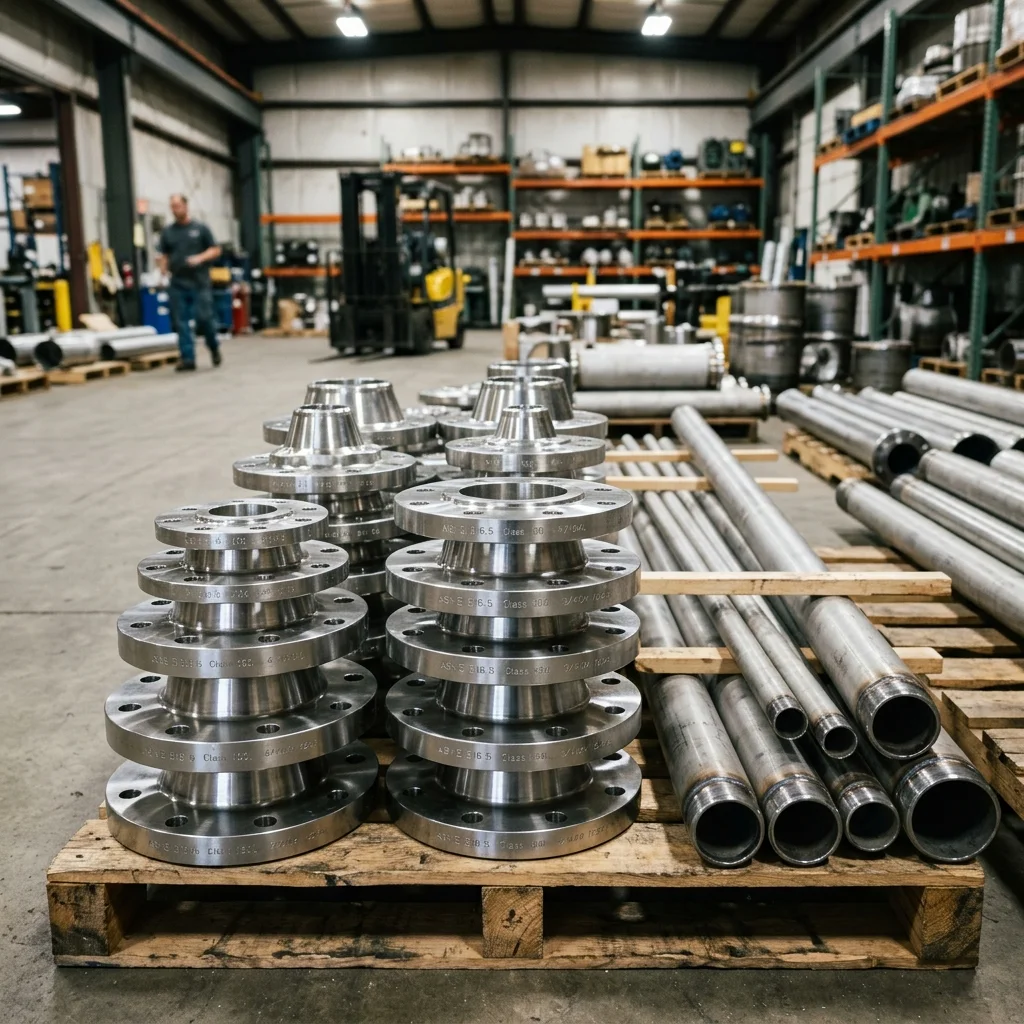
In 2026, oil and gas procurement teams across the Middle East no longer treat pipes, valves, fittings and flanges as routine commodities. Project schedules, material availability, certification depth and logistics reliability now sit at the centre of commercial decisions. EPC contractors, refiners, petrochemical operators and industrial buyers face tighter windows between award and first steel on site, while national oil companies continue to advance large gas, pipeline and processing programmes.
Lead-time pressure, documentation scrutiny and the need for reliable regional supply have turned what used to be straightforward RFQs into multi-factor evaluations. Carbon-steel line pipe, stainless and duplex process pipe, API valves, ASME flanges and butt-weld or forged fittings are all affected. Buyers who still rely on lowest-price, longest-lead international orders alone are carrying higher schedule and compliance risk than those who balance stock availability, proven traceability and responsive regional partners.
This article examines the practical ways current market conditions are reshaping purchasing decisions for piping materials in the UAE, Saudi Arabia, Qatar, Oman, Kuwait, Bahrain, Iraq and the wider GCC.
What Is Changing in Oil & Gas Procurement in 2026?
Several forces are converging. Major gas and midstream programmes continue across the region—Jafurah and related infrastructure in Saudi Arabia, North Field expansion phases in Qatar, ADNOC upstream and processing developments in the UAE, and ongoing work in Iraq and Kuwait. At the same time, geopolitical disruption around key maritime routes has elevated the strategic value of pipeline capacity that can move crude and products without sole reliance on the Strait of Hormuz. Saudi Arabia has examined further expansion of its East-West pipeline system; the UAE has accelerated west-east capacity to Fujairah. These infrastructure responses increase demand for large-diameter line pipe, associated valves, flanges and fittings while reinforcing the need for dependable delivery timelines.
Supply-chain volatility remains real. Shipping disruptions, fluctuating mill capacity for specialised grades and longer transit times for material originating outside the region have made pure made-to-order international procurement riskier for time-critical packages. Procurement teams therefore place greater weight on suppliers who can demonstrate both technical compliance and realistic delivery schedules.
EPC contractors themselves are more focused on procurement risk. Liquidated damages, idle construction resources and late commissioning create strong incentives to reduce uncertainty around material arrival and inspection acceptance. Vendor qualification, multi-source capability and documented quality systems now rank alongside unit price.
How These Trends Are Affecting Piping Materials
Pipes:
Seamless and welded carbon-steel line pipe (API 5L grades) remains high-volume for trunklines and gathering systems. Process piping in stainless, alloy and duplex grades is required for corrosive or high-temperature service. Large-diameter or heavy-wall items and exotic alloys face the longest lead times; standard carbon-steel sizes are more readily available from regional stock or shorter mill cycles.
Valves:
Ball, gate, globe and check valves specified to API 6D, API 600 or related standards must meet project-specific pressure classes, end connections and material requirements (including NACE sour-service where applicable). Fire-safe and fugitive-emission performance are frequently mandated. Long-lead engineered or large-bore valves benefit from early ordering or access to stocked common sizes.
Fittings and flanges:
Butt-weld fittings (ASME B16.9) and forged fittings (B16.11), together with weld-neck, slip-on, blind and RTJ flanges (ASME B16.5 / B16.47), must match pipe material and pressure class exactly. Traceability from heat number through to finished component is non-negotiable on most GCC projects. Non-standard sizes or higher-alloy grades again push buyers toward either early commitment or suppliers holding relevant inventory.
Speciality materials — duplex, super duplex, nickel alloys—see elevated demand in sour-gas, seawater-injection and high-chloride environments. Availability is tighter and documentation requirements stricter.
Why Lead Time Is Becoming a Procurement KPI
Material lead time now influences overall project critical-path planning. Conventional carbon-steel flanges and fittings in common classes can often be supplied from UAE stock in a matter of weeks. Alloy, duplex and non-standard items routinely require several months from order placement through mill production, testing, coating (if required) and delivery.
Logistics add further variables: port congestion, vessel availability, inland transport to remote sites and customs clearance all affect the final “on-site” date. Buyers who treat lead time as a hard KPI evaluate suppliers on demonstrated stock levels, multi-mill relationships, consolidated shipping capability and realistic schedule commitments rather than optimistic quoted times alone. Early engagement and package consolidation reduce the risk of staggered deliveries that disrupt construction sequencing.
Certification and Traceability Are Becoming More Important
Virtually every major Middle East project requires full material traceability. Buyers expect:
– Compliance with relevant API, ASTM and ASME specifications
– Mill Test Certificates (typically EN 10204 3.1 or 3.2) linked to heat numbers
– Positive Material Identification (PMI) where specified
– NACE MR0175 / ISO 15156 compliance for sour service
– Hydrostatic, dimensional and non-destructive examination records
– Third-party inspection reports when mandated by the end-user or EPC
Incomplete or inconsistent documentation is a common cause of material rejection or site hold points. Suppliers who deliver complete, organised documentation packages with the physical goods reduce administrative burden and inspection cycle time. Heat-number traceability from melt through fabrication and coating remains a baseline expectation for critical piping systems.
Ex-Stock vs Made-to-Order: Which Is Better?
Neither approach is universally superior; the correct choice depends on schedule, specification complexity and risk tolerance.
| Factor | Ex-Stock / Regional Inventory | Made-to-Order (Mill Direct) |
|---|---|---|
| Lead time | Days to a few weeks for common items | Weeks to many months |
| Specification match | Limited to available grades/sizes | Full customisation |
| Cost | Often competitive on standard items; premium possible on scarce grades | Volume pricing possible; freight & inventory risk |
| Traceability | Must still be complete | Controlled from melt |
| Risk profile | Lower schedule risk; stock-out risk on exotic grades | Higher schedule risk; lower specification risk |
| Best for | Fast-track packages, common carbon/stainless, shutdowns | Long-lead specialised alloys, large diameters, unique ratings |
Many successful packages combine both: standard carbon-steel and common stainless items from regional stock, with longer-lead alloys ordered early from qualified mills. Suppliers who maintain both capabilities give procurement teams flexibility.
Material Selection Is Becoming More Project-Specific
Carbon steel remains the workhorse for many utility and low-to-moderate corrosivity services. Stainless grades (especially 316/316L) are widely used in coastal and process environments. Alloy steels address high-temperature or higher-strength requirements. Duplex and super duplex are specified for chloride-rich or sour conditions where corrosion resistance and strength are both critical. Nickel-based alloys appear in ultra-sour or highly aggressive services.
Procurement decisions must follow the project material specification and end-user standards (for example Aramco SAMSS, ADNOC AGES or equivalent). Substitutions require formal engineering approval. The practical implication for buyers is earlier visibility of material grades so that stock checks and mill capacity can be confirmed before the critical path is locked.
What EPC Contractors Should Look for in an Oil & Gas Supplier
A practical evaluation checklist includes:
– Demonstrable compliance with API, ASTM, ASME and project-specific standards
– Breadth of product range covering pipes, valves, flanges and fittings in relevant materials
– Technical competence to interpret specifications and flag mismatches early
– Transparent stock position and realistic lead-time commitments
– Established mill and manufacturer network with multi-sourcing options
– Complete, organised documentation packages (MTCs, heat numbers, inspection records)
– Quality-control processes and willingness to accommodate third-party inspection
– Logistics capability for GCC destinations, including consolidation and customs support
– Responsive RFQ turnaround and clear commercial communication
Suppliers who score well across these points reduce the total cost of ownership beyond the unit price of individual items.
How GCC Buyers Can Reduce Procurement Risk
Practical steps that consistently improve outcomes include:
– Engaging suppliers early enough to confirm stock and mill slots for critical long-lead items
– Consolidating packages where feasible to simplify logistics and documentation
– Prioritising vendors who can demonstrate both regional inventory and international mill access
– Requiring complete documentation packages as a contractual deliverable, not an afterthought
– Building schedule contingency around known long-lead grades rather than optimistic assumptions
– Evaluating total landed cost and schedule risk rather than unit price alone
– Maintaining approved-vendor or preferred-supplier relationships that already understand GCC documentation and logistics norms
These measures do not eliminate risk, but they make it measurable and manageable.
The Role of Reliable Regional Suppliers
UAE-based suppliers occupy a useful position in the regional supply chain. Proximity to major ports, established road and air links into Saudi Arabia, Qatar, Oman, Kuwait, Bahrain and Iraq, and familiarity with local customs and documentation practices allow faster response on standard items and more predictable coordination on project packages. Stock of common carbon-steel and stainless pipes, valves, flanges and fittings can bridge gaps while mill orders for specialised grades are fulfilled.
Gasify Middle East operates from this regional base, supplying API- and ASME-compliant pipes, industrial valves, flanges, butt-weld and forged fittings, and related materials to EPC contractors, operators and industrial buyers across the GCC and beyond. The combination of technical documentation support, stock visibility and logistics coordination helps project teams manage the schedule and compliance pressures that characterise 2026 procurement.
Planning an oil & gas or industrial piping project in the Middle East?
Please contact Gasify Middle East for pipes, valves, flanges, fittings, and other project materials, including technical documentation and regional supply support.